DISCLOSURE: This post contains affiliate links. If you buy something through them, I may earn a small commission at no extra cost to you. Thank you for your support!
Why Short Ribs Are One Of The Best Cuts For Slow Cooking
There are many cuts of beef that can produce a beautiful meal, but few deliver the same depth of flavor and tenderness as short ribs. When people search for slow cooked beef recipes, short ribs almost always appear near the top, and for good reason. Short ribs have a combination of meat, fat, and connective tissue that transforms during long cooking. With time and gentle heat, the tough fibers break down, the fat melts into the sauce, and the meat becomes soft enough to pull apart with a fork.
That transformation is exactly why braised short ribs are so loved in home kitchens and restaurants alike. Unlike leaner cuts that can easily dry out, short ribs become more tender the longer they cook. The bone also plays a role in the final flavor. Meat cooked on the bone develops a deeper and richer taste compared to boneless cuts. When you braise short ribs slowly in a flavorful liquid, the result is a dish that feels comforting, rich, and satisfying.
Another reason short ribs are such a great choice is that they are forgiving. You do not need perfect timing or complicated techniques. Once the short ribs are seared and placed in a flavorful braising liquid, the oven does most of the work. After several hours the meat becomes incredibly tender and the sauce develops layers of flavor.
See how to make the recipe in this video.
Why A Good Wine Matters For Braised Short Ribs
Wine is one of the key ingredients that defines the flavor of braised short ribs. When wine cooks down it becomes concentrated, creating a base that adds acidity, fruitiness, and complexity to the sauce. This is why it is worth choosing a good wine when making short ribs.
A common question people ask is whether expensive wine is necessary for braising. The answer is no, but the wine should still be something you would happily drink. If a wine tastes unpleasant in the glass, it will not improve during cooking. Since braised short ribs rely on reduced wine for much of their flavor, starting with a decent bottle makes a noticeable difference.
Red wines work particularly well with short ribs because they complement the richness of the beef. A medium to full bodied wine such as Cabernet Sauvignon, Merlot, or Syrah adds depth without overpowering the dish. As the wine reduces, the alcohol cooks off and the remaining flavors concentrate. What you are left with is a sauce that balances the richness of the meat with brightness and complexity.
Reducing the wine before adding it to the braise also improves the final result. When the wine cooks down it becomes thicker and more intense, which allows the flavor to spread evenly through the sauce. This is a small step, but it makes a noticeable difference when cooking short ribs.
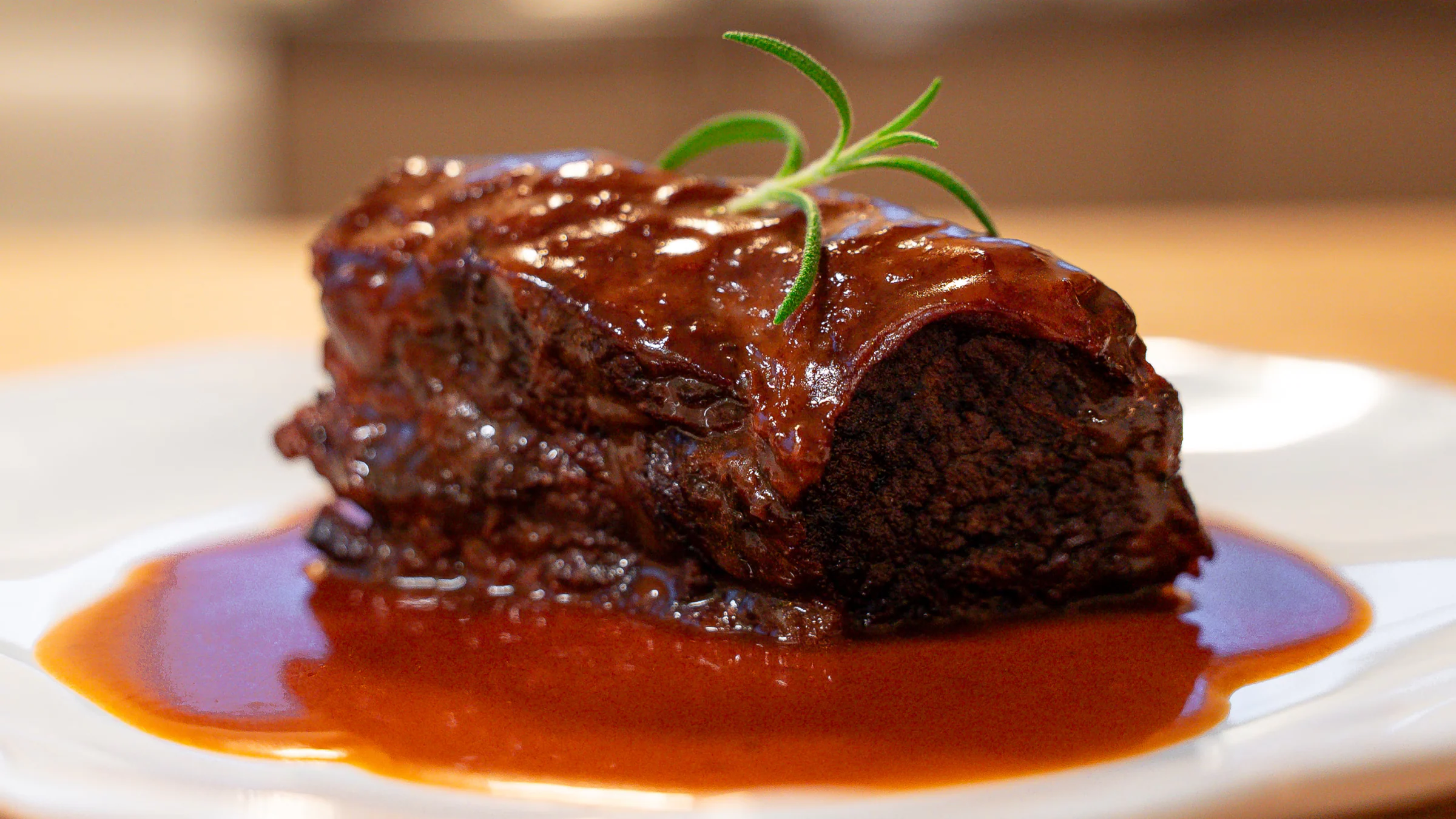
Short ribs braised in wine with pomegranate and homemade beef stock.
Why Homemade Beef Stock Makes A Big Difference
One of the easiest ways to improve braised short ribs is to use homemade beef stock. Many store bought stocks are thin and lack the depth that comes from long simmering bones, vegetables, and aromatics. Homemade stock, on the other hand, contains natural gelatin and concentrated flavor that gives braised dishes a richer texture.
When short ribs cook slowly in homemade beef stock, the liquid gradually becomes a sauce with body and structure. The gelatin from the stock combines with the collagen from the short ribs, creating a silky texture that is difficult to achieve with most store bought versions.
Another advantage of homemade stock is control. When you make beef stock at home you decide how much salt, vegetables, and aromatics go into the pot. This means the stock can complement the short ribs rather than competing with them.
If you want to make your own beef stock, I highly recommend doing so. The process is simple and the flavor difference is worth it. You can find my detailed guide below. Once you start using homemade stock for braised short ribs, it becomes difficult to go back to the boxed alternatives.
Pomegranate juice adds a bright, slightly tart flavor that works beautifully with rich short ribs. It cuts through the heaviness of the meat and balances the deep flavors of wine and beef stock.
While bottled pomegranate juice works well, it is surprisingly easy to make your own fresh version at home. All you need is a pomegranate, a zip lock bag, a rolling pin, and a strainer.
Start by placing the pomegranate seeds inside a sturdy zip lock bag. Seal the bag and gently press on the seeds with a rolling pin. As you roll over them, the seeds will release their juice. Continue pressing until most of the liquid has been extracted.
Once the seeds have been crushed, open the bag and pour the mixture through a fine strainer into a bowl. The strainer will catch the pulp and seed fragments while the juice collects below. What you are left with is fresh pomegranate juice that has a brighter flavor than many bottled versions.
This juice works wonderfully in braised short ribs because its acidity helps balance the richness of the meat. Even a small amount can bring a noticeable freshness to the sauce.
Pomegranate seeds can easily be turned into juice using a zip lock back and a rolling pin.
Choosing Vegetables For Braised Short Ribs
One of the great things about cooking short ribs is flexibility. The vegetables used in a braise are not fixed, you can easily adapt the vegetables depending on what you enjoy and what is available in your kitchen. For example, root vegetables such as carrots and parsnips add sweetness and body to the sauce. Leeks and onions provide a mild aromatic base. Peppers or chili can introduce a subtle warmth. Garlic and tomato paste deepen the savory flavor.
When braising short ribs, the vegetables slowly soften and release their flavors into the cooking liquid. By the time the short ribs are finished cooking, the vegetables have helped build a rich and layered sauce.
This flexibility means you can adjust the recipe depending on the season. In colder months, hearty root vegetables work beautifully with short ribs. In warmer seasons you might add lighter vegetables or herbs that bring freshness to the dish.
Short ribs are a forgiving cut of meat, which means they adapt well to different ingredient combinations. As long as the braising liquid is flavorful and the cooking time is long enough, the short ribs will still become tender and delicious.
Why Slow Braising Is Perfect For Short Ribs
Slow braising is the ideal cooking method for short ribs. Unlike quick cooking methods such as grilling or pan frying, braising uses gentle heat over a long period of time. This allows the connective tissue inside the short ribs to gradually break down.
As the short ribs cook, the collagen melts into the sauce and creates a silky texture. The meat becomes tender while the sauce becomes richer and thicker. This transformation is what makes braised short ribs so satisfying.
Another benefit of braising is that the flavors have time to develop. The wine, stock, herbs, vegetables, and meat slowly blend together into a sauce that tastes complex and balanced.
Short ribs are particularly suited to this technique because they contain the exact balance of fat and connective tissue needed for slow cooking. After several hours in the oven, the short ribs become incredibly tender while the sauce develops deep flavor.
Short ribs are perfect with mashed potatoes or polenta.
Serving Suggestions For Braised Short Ribs
Braised short ribs are versatile when it comes to serving. Because the sauce is rich and flavorful, the dish pairs well with simple sides that allow the short ribs to remain the star of the plate.
Mashed potatoes are a classic pairing with short ribs. The creamy texture absorbs the sauce beautifully and balances the richness of the meat. Polenta is another excellent choice, especially if you prefer something slightly lighter but still comforting.
Rice also works well with braised short ribs. The grains soak up the sauce and create a satisfying base for the tender meat. Fresh bread can serve a similar purpose, allowing you to enjoy every bit of the sauce.
If you want to add freshness to the plate, a simple salad or lightly roasted vegetables provide contrast. The bright flavors help balance the richness of the short ribs while keeping the meal from feeling too heavy.
No matter how you serve them, well cooked short ribs have a way of turning a simple dinner into something memorable. With good wine, flavorful stock, and a little patience, short ribs reward the cook with one of the most satisfying dishes you can make in the kitchen.
Rich, tender short ribs braised in wine with pomegranate and beef stock.
Total Time:4 hours 30 minutes
Yield:4–6 portions 1x
Ingredients
Scale
1 ½–2 kg (3.3–4.4 lb) short ribs
4 tbsp cooking oil
1 bottle (750 ml / 25 fl oz) red wine
2 dl (¾ cup) unsweetened pomegranate juice
1 onion, chopped
1 leek, white part only, chopped
1 carrot, sliced
1 parsnip, sliced
1 red bell pepper, chopped
1 red chili pepper, sliced
5 garlic cloves, chopped
2 tbsp tomato paste
1–1 ½ liters (4–6 cups) beef stock
2 tbsp miso paste
2 sprigs rosemary
3–4 sprigs thyme
Salt, to taste
Instructions
Pour the red wine into a pot and bring to a boil. Let it reduce until about ⅓ of the original volume remains. Add the pomegranate juice and let it simmer for a few more minutes. Set aside.
If the short ribs are not already cut, divide them between the bones.
Salt the meat generously on all sides.
Heat 2 tbsp cooking oil in a frying pan over high heat. Sear the ribs on all sides until well browned. Set aside.
In a deep oven-safe pot, heat the remaining 2 tbsp cooking oil and sauté the onion until softened.
Add the leek and sauté for a few minutes.
Add the carrot, parsnip, bell pepper, and chili pepper. Stir and sauté for about a minute.
Add the tomato paste and garlic, mix well, and let it cook for a few minutes to develop flavor.
Add the reduced wine and pomegranate juice, the beef stock, and the miso paste. Stir to combine.
Season gently with salt. Adjust later if needed.
Add the short ribs to the pot along with any juices that have collected. Add the rosemary and thyme.
Cut a piece of parchment paper slightly larger than the pot. Fold it in half, then in half again to form a triangle, and fold again into a narrow wedge. Measure from the center of the pot to the edge and trim the wedge to that length. Cut off a very small piece of the tip. Place the parchment directly on the surface of the liquid to form a cartouche.
Cover the pot with a lid, leaving it slightly open.
Braise in the oven at 140°C (285°F) for 4 hours.
Remove from the oven and let rest for 30 minutes.
If desired, strain the sauce and simmer it in a pot to reduce and thicken slightly before serving.
Leave a Reply