DISCLOSURE: This post contains affiliate links. If you buy something through them, I may earn a small commission at no extra cost to you. Thank you for your support!
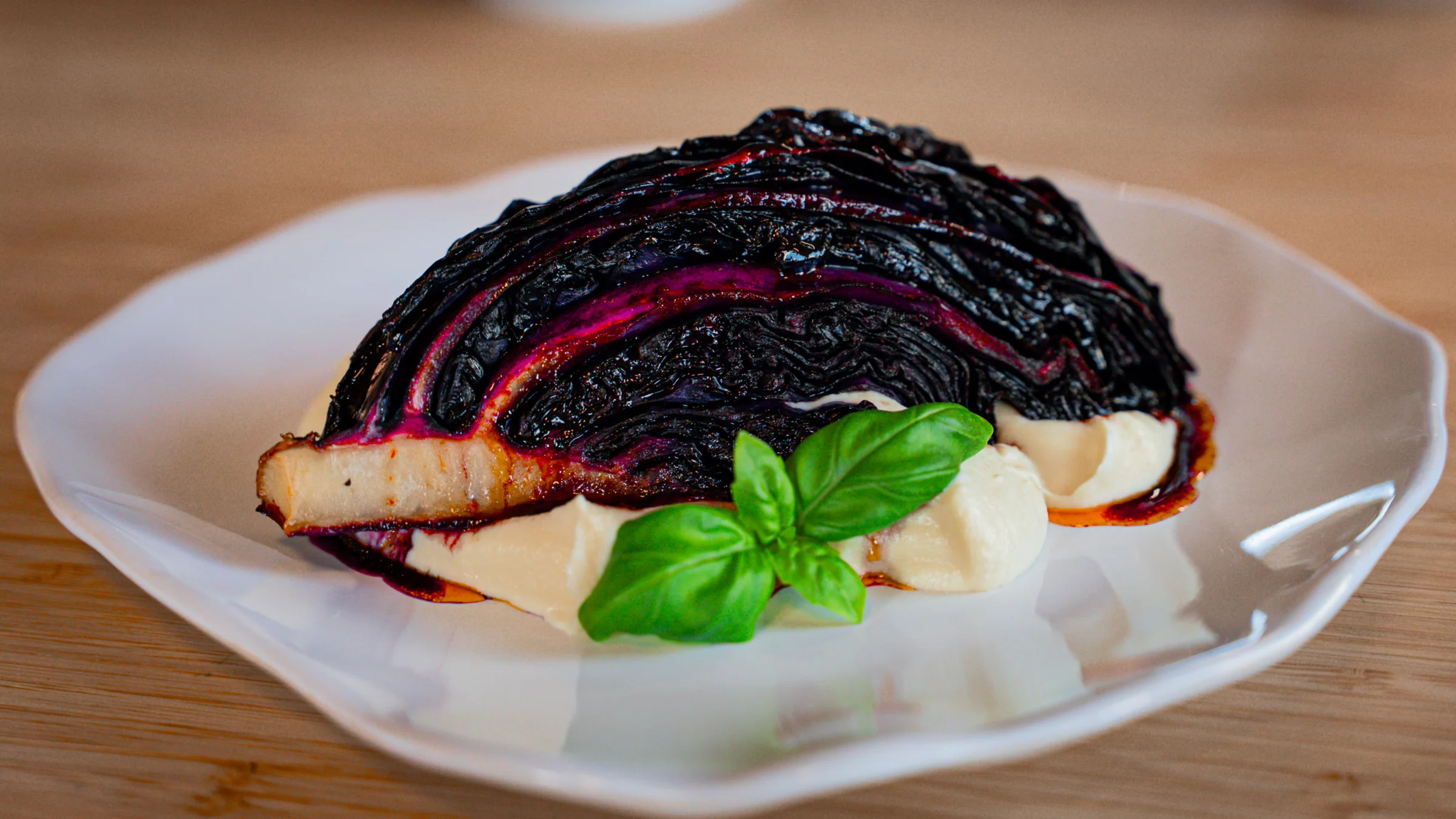
Roasted Red Cabbage With Cherry Glaze And Silky Cauliflower Purée
Cabbage is one of those ingredients that almost everyone knows, but very few people truly explore. It is often treated as something simple, something cheap, something that sits on the side of a plate instead of becoming the center of it. But cabbage has a depth that is easy to miss if you only boil it or shred it raw.
When you take your time with cabbage, when you cook it slowly and give it structure and flavor, it transforms completely. The texture becomes tender while still holding shape, the natural sweetness develops, and the edges caramelize into something rich and almost meaty. This is where cabbage becomes interesting, not just as a vegetable, but as a main component of a dish.
In this dish, cabbage is not an afterthought. It is the focus. Thick wedges are roasted until soft inside and deeply caramelized outside, coated in a glaze that balances sweetness, acidity, and spice. Paired with a smooth cauliflower purée, the result is something that feels far more refined than what most people expect from cabbage.
See how to make the recipe in this video.
Turning Cabbage Into A Centerpiece
The key to elevating cabbage is structure. Instead of slicing it thin or chopping it down, keeping it in wedges allows the cabbage to hold together as it cooks. This changes everything. The outer layers crisp slightly, while the inner layers soften and absorb flavor.
Salt plays an important role early on. When you salt cabbage and let it sit, it begins to release moisture. This not only improves texture, it also helps the glaze adhere better later. You are essentially preparing the cabbage to absorb flavor more effectively.
Roasting is where the real transformation happens. Heat slowly breaks down the fibers, while the natural sugars in the cabbage begin to caramelize. This is what gives cabbage that deep, almost roasted sweetness. It is not aggressive or overpowering, it is subtle and layered. When done right, cabbage becomes something that can stand on its own. It has texture, it has flavor, and it has presence on the plate.
Building Flavor With Cherry Juice Instead Of Wine
A lot of recipes use wine when building a glaze, but in this case, cherry juice creates a more balanced result. Wine can sometimes push things too far in one direction, especially sweetness. Many wines, particularly cherry wines used in cooking, bring a sweetness that can become dominant when reduced.
Cherry juice works differently. It gives you fruitiness and acidity without the heaviness that wine can introduce. The flavor feels cleaner, more direct, and easier to balance with other ingredients like gochujang and honey.
If you do not have cherry juice, there are a few alternatives that work well. Unsweetened cranberry juice is a strong option, since it provides acidity and a similar deep red color. Pomegranate juice can also work. Even a mix of water and a small amount of vinegar with a touch of sugar can replicate the structure of the glaze if needed. The important part is balance. You want acidity to cut through the richness of the cabbage, but you do not want the glaze to become overly sweet or heavy.
Understanding The Role Of Clarified Butter
Clarified butter is one of those ingredients that makes a subtle but important difference. It behaves differently from regular butter because the milk solids have been removed. This means it has a higher smoke point and a cleaner flavor.
When you are cooking cabbage at higher heat or roasting it for a long time, clarified butter helps prevent burning. Regular butter can brown too quickly, especially when exposed to prolonged heat, and that can introduce bitterness. Clarified butter allows you to cook confidently without worrying about that. It also carries flavor more cleanly. When combined with ingredients like juniper berries and gochujang, clarified butter acts as a stable base that lets those flavors come through clearly.
If you want to make your own clarified butter, it is a simple process that involves gently melting butter and separating the solids. You can learn how to make it in the video below.
Learn how to make clarified butter and ghee in this video.
Layering Flavor In The Glaze
The glaze is what ties the cabbage together. It is where sweetness, spice, and acidity meet.
Gochujang brings depth and a mild heat. It is not just spicy, it has a fermented complexity that adds richness to the cabbage. Honey balances that heat with a soft sweetness, while the cherry juice introduces acidity and fruitiness.
Juniper berries add something unexpected. They have a slightly piney, aromatic quality that lifts the entire dish. It is subtle, but it creates a layer of flavor that makes the cabbage feel more complex.
As the glaze reduces, it thickens and intensifies. This is important because it allows the glaze to coat the cabbage instead of running off. The result is a glossy, deeply flavored surface that clings to each wedge.
The Contrast Of A Silky Cauliflower Purée
Cabbage on its own can be bold, both in texture and flavor. That is why pairing it with something smooth and mild works so well. Cauliflower purée brings balance. When cooked slowly with cream and butter, cauliflower becomes incredibly soft. Blending it creates a texture that is silky and almost airy. It acts as a neutral base that allows the cabbage to stand out, while still adding richness to the dish.
There is also a contrast in texture that makes the dish more interesting. The cabbage has structure and bite, while the purée is smooth and delicate. Together, they create a more complete experience.
This kind of pairing is important when working with cabbage. Since cabbage can be quite assertive, it benefits from something that softens the overall impression without taking away from its character.
Why This Dish Works
What makes this dish successful is not just the individual components, but how they interact.
The cabbage is roasted until it develops both softness and caramelization. The glaze adds depth, balancing sweetness, acidity, and spice. The cauliflower purée provides contrast and richness without overpowering the cabbage. Each element has a purpose. Nothing is there by accident.
This is also a good example of how cabbage can be elevated without becoming complicated. The techniques are straightforward, but the result feels refined. It is about paying attention to detail, understanding how ingredients behave, and letting cabbage take the lead.
Rethinking Simple Ingredients
Cabbage is often associated with simple cooking, but that does not mean it has to be boring. In fact, simple ingredients are often the most rewarding to work with because they give you room to transform them. When you treat cabbage with care, when you think about texture, balance, and flavor, it becomes something entirely different. It becomes a dish that feels intentional, something you would be proud to serve.
This is the kind of cooking that changes how you see ingredients. It is not about making something complicated, it is about making something thoughtful. And once you start looking at cabbage this way, it is hard to go back.
Roasted red cabbage with a rich cherry glaze, caramelized in the oven and served with a silky cauliflower purée. A simple way to elevate cabbage into a flavorful main dish.
Total Time:1 hour 55 minutes
Yield:4 portions 1x
Ingredients
Scale
Cabbage
1 head red cabbage
3 tbsp clarified butter
2 tsp juniper berries
½ tbsp gochujang
1 tbsp honey
½ dl (¼ cup) cherry juice
Salt, to taste
Cauliflower Purée
1 cauliflower
1 onion, chopped
3 garlic cloves, chopped
2 tbsp clarified butter
3 tbsp butter
2 dl (¾ cup + 1 tbsp) heavy cream
1 tbsp olive oil
Salt, to taste
Instructions
Cabbage
Cut thick wedges through the cabbage root so they hold together. Salt generously on all sides and let sit for 10–20 minutes.
Heat 3 tbsp clarified butter in a frying pan. Add the juniper berries and fry for about 1 minute.
Add the gochujang and mix as it bubbles. Add the honey and let it simmer while stirring for 1 minute.
Add the cherry juice. Stir and let simmer until a thick glaze forms.
Pat the cabbage wedges dry with paper towels and place them on a roasting tray.
Pour the glaze over the cabbage wedges. Bake at 180°C (355°F) for 1 hour 20 minutes. If they start to brown too much, cover loosely with parchment paper.
Cauliflower Purée
Break the cauliflower into florets and slice them finely, leaving out the root and thick stems.
Melt the clarified butter in a frying pan. Add the onion, season with salt, and sauté until softened.
Add the garlic, cauliflower, and 2 tbsp butter. Sauté for a few minutes.
Add the heavy cream and let simmer on low heat for 10–15 minutes, until the cauliflower is very soft.
Blend until silky smooth. Add 1 tbsp butter and the olive oil, then blend again to combine.
Taste and adjust the salt if needed.
For an extra smooth texture, pass through a fine-mesh strainer.
Leave a Reply