IvanEats
Home Cooking Methods Quick & Easy Onion Steak With Rich Umami Sauce

Onion Steak With Rich Umami Sauce

DISCLOSURE: This post contains affiliate links. If you buy something through them, I may earn a small commission at no extra cost to you. Thank you for your support!

Onion steak.

Onion Steak With Umami-Rich Sauce

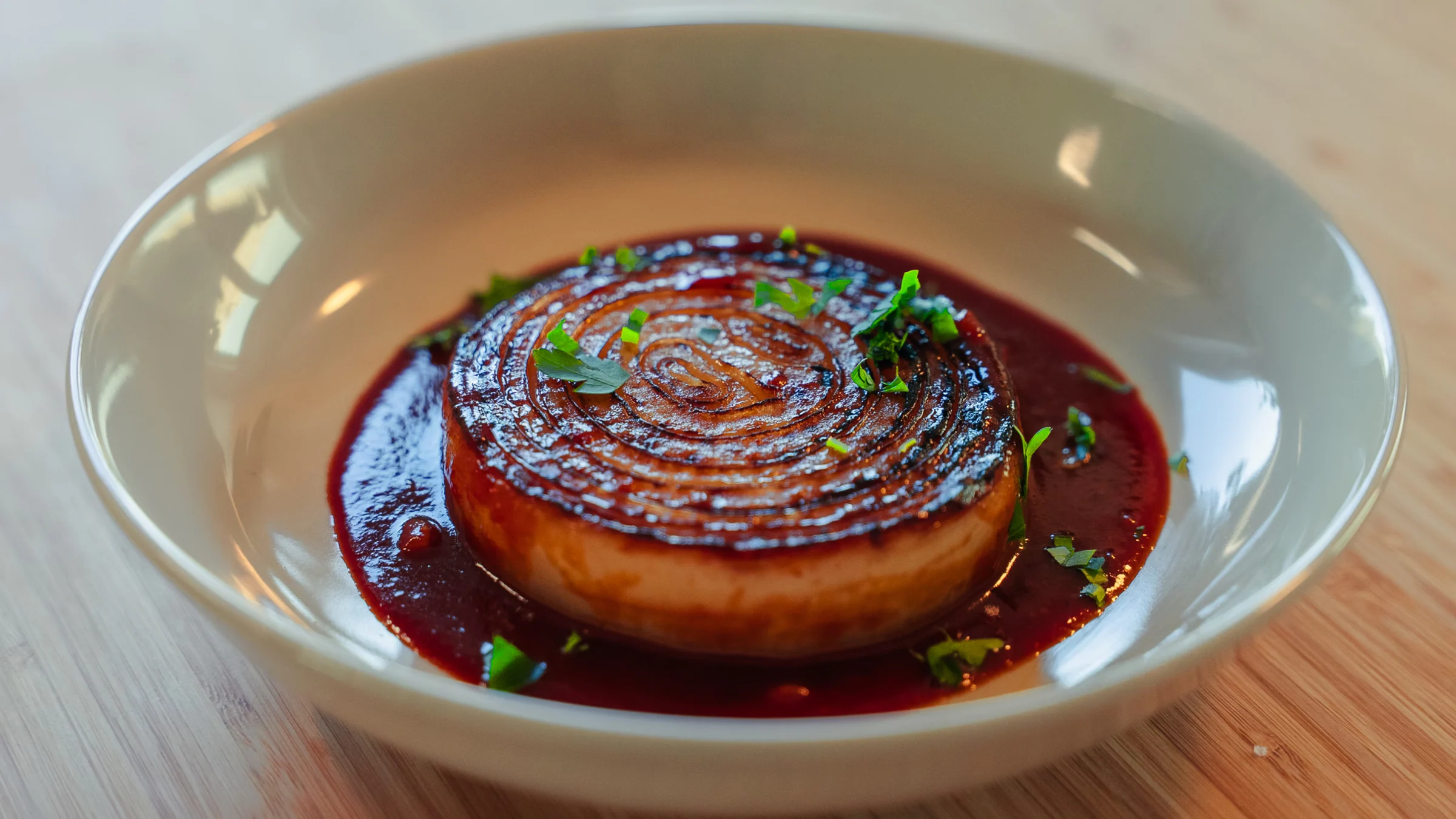
There is something deeply satisfying about turning a simple vegetable into the center of a meal, and onion steak is one of those dishes that proves how far technique and flavor can take you. What looks humble at first glance transforms into something rich, savory, and surprisingly luxurious. This onion steak is soft, deeply caramelized, and coated in a glossy sauce that balances sweetness, saltiness, and umami.

If you have ever felt stuck cooking the same meals on repeat, onion steak is a perfect way to break that cycle without making things complicated or expensive. It uses ingredients that are easy to find, yet the final result feels thoughtful and different. That is part of its appeal. It shows that cooking something exciting does not require rare ingredients or advanced skills, only a bit of curiosity and a willingness to try something new.

See how to make the recipe in this video.

Why Onion Steak Works So Well

At its core, onion steak works because onions naturally develop complex flavors when cooked properly. When you sear a thick slice of onion, the sugars inside begin to caramelize. This creates a deep, slightly sweet flavor that pairs beautifully with savory ingredients like beef stock, miso, and gochujang.

The texture is just as important. A properly cooked onion steak becomes tender but still holds its shape. It almost mimics the bite of a soft cut of meat, which is why the name onion steak feels so fitting. It is not trying to replace meat, but it borrows the structure and presentation of a steak to create something equally satisfying in its own way.

Why You Should Cut Onion Slices From The Middle

One of the most important details when making onion steak is how you cut the onion. Taking thick slices from the middle of the onion ensures that each piece stays intact during cooking. The center of the onion has the most stable structure, with evenly layered rings that hold together when seared and simmered. If you were to use the outer or uneven parts, the layers would separate too easily, and you would lose that steak-like appearance and texture. The middle slices give you that clean, round shape that browns evenly and absorbs sauce without falling apart.

Just as important is what you do with the rest of the onion. Those leftover pieces should never be thrown away. They are perfect for soups, stocks, stir-fries, or sauces. Keeping and using the entire onion is not only economical but also part of building better cooking habits. Small decisions like this reduce waste and make your kitchen more efficient over time.

The Role Of Homemade Beef Stock

A key part of what makes this onion steak so flavorful is the sauce, and that starts with a good beef stock. While store-bought options can work, making your own beef stock gives you a much deeper and cleaner flavor.

Homemade beef stock has a richer body, often with a natural gelatin content that creates a silky texture in sauces. It allows the onion steak to feel more substantial, almost like a slow-cooked dish, even though it comes together relatively quickly. You also have full control over the seasoning, which means you can avoid excessive salt or additives that are often found in packaged versions.

Using your own stock also connects the dish to a larger cooking process. When you make stock at home, you are using bones and scraps that might otherwise go to waste. It becomes part of a cycle where each dish supports the next. If you want to try it yourself, you can follow the detailed steps in the recipe below.

Beef, Chicken & Duck Stock

Make rich homemade beef, chicken, and duck stock from scratch. This simple recipe creates flavorful…

Go to recipe

Understanding Sake In Cooking

Sake plays an important role in building the flavor of onion steak. It is a Japanese rice wine that adds both depth and subtle sweetness to the dish. When cooked, the alcohol evaporates, leaving behind a gentle complexity that enhances the other ingredients.

In this recipe, sake is used to deglaze the pan after searing the onions. This step lifts all the browned bits from the surface, which are packed with flavor. As the sake reduces, it concentrates those flavors and creates a base for the sauce.

If you have never cooked with sake before, it is worth trying. It is mild compared to many wines and blends seamlessly into savory dishes, especially when paired with ingredients like miso and gochujang.

What Is Gochujang And Why It Matters

Gochujang is a Korean fermented chili paste that brings heat, sweetness, and depth all at once. It is one of the key ingredients that gives onion steak its bold character. Unlike simple chili sauces, gochujang has a layered flavor that develops over time, thanks to fermentation.

When added to the sauce, it provides a gentle heat that does not overpower the dish. Instead, it balances the sweetness of the onions and the richness of the stock. Even a small amount can transform the entire flavor profile, making the onion steak feel more complex and satisfying.

If you are new to gochujang, start with a smaller amount and adjust to taste. Its intensity can vary depending on the brand, but once you get familiar with it, it becomes an incredibly versatile ingredient to keep in your kitchen.

Onion steak.
This onion steak goes so well with mashed potatoes.

The Depth Of Miso

Miso is another fermented ingredient that plays a crucial role in this dish. It is a paste made from soybeans, salt, and koji, and it brings a deep umami flavor that ties everything together. In onion steak, miso acts almost like a seasoning booster. It enhances the natural savoriness of the beef stock and complements the sweetness of the onions. The result is a sauce that feels full and rounded, without needing a long cooking time.

Different types of miso can be used depending on your preference. Lighter miso tends to be milder and slightly sweet, while darker miso is stronger and more intense. Either can work, but the key is to mix it well into the liquid so it dissolves evenly and coats the onion steak properly.

Why Mashed Potatoes Are The Perfect Pairing

Serving onion steak with mashed potatoes is not just a traditional choice, it is a practical one. The sauce in this dish is rich and flavorful, and mashed potatoes act as the perfect base to absorb it. The soft, creamy texture of mashed potatoes contrasts beautifully with the tender onion steak. Each bite becomes balanced, with the potatoes mellowing the intensity of the sauce while still carrying its flavor.

Mashed potatoes also make the dish feel more complete and comforting. They turn onion steak from a simple vegetable dish into something that feels like a full meal. If you have ever had a dish where the sauce is too good to leave behind, you will understand why this pairing works so well.

A Simple Dish With Big Impact

What makes onion steak stand out is how it transforms simple ingredients into something memorable. It is a reminder that cooking does not always have to be complicated to be exciting. By focusing on technique and a few well-chosen ingredients, you can create a dish that feels both comforting and new.

Onion steak is also flexible. You can adjust the level of spice, experiment with different stocks, or pair it with other sides depending on what you have available. That adaptability makes it a great addition to your regular cooking rotation.

If you are looking for something that breaks routine without adding stress, onion steak is a strong place to start. It brings together familiar ingredients in a new way, and that is often where the most interesting cooking happens.


Recommended Tools for This Recipe

Sauté Pan


Print
clock clock iconcutlery cutlery iconflag flag iconfolder folder iconinstagram instagram iconpinterest pinterest iconfacebook facebook iconprint print iconsquares squares iconheart heart iconheart solid heart solid icon
Onion steak.

Onion Steak With Rich Umami Sauce

5 Stars 4 Stars 3 Stars 2 Stars 1 Star

No reviews

Onion steak with a rich umami sauce using gochujang, miso, and beef stock. A simple, flavorful dish best served with mashed potatoes.

  • Total Time: 35 minutes
  • Yield: 2 portions 1x

Ingredients

Scale
  • 2 large onions
  • 2 tbsp cooking oil
  • 2 dl (¾ cup) sake
  • 2 tbsp butter
  • 2 garlic cloves, chopped
  • 2 ½ dl (1 cup) beef stock
  • ½1 tbsp gochujang
  • 1 tbsp miso
  • 1 tbsp honey

To Serve

  • Mashed potatoes
  • Parsley, chopped, for garnish

Instructions

  1. Cut out a thick slice from the middle of each onion. Save the remaining parts for another dish.
  2. Heat the cooking oil in a frying pan over medium heat. Sear the onion slices on both sides until golden brown, making sure they do not burn.
  3. Add the sake and let it reduce for a few minutes.
  4. Add the butter and chopped garlic, and let cook for a few minutes until fragrant.
  5. In a separate bowl, mix the warm beef stock with the gochujang and miso until fully combined.
  6. Carefully remove the onions from the pan. Pour in the stock mixture, add the honey, and let it simmer for a few minutes.
  7. Return the onions to the pan and let everything simmer on low heat for about 10 minutes, until the onions are tender.
  8. Serve with mashed potatoes and garnish with chopped parsley. Enjoy!
  • Prep Time: 10 minutes
  • Cook Time: 25 minutes

Leave a Reply

Your email address will not be published. Required fields are marked *

Recipe rating 5 Stars 4 Stars 3 Stars 2 Stars 1 Star

RELATED POSTS

View all

view all