DISCLOSURE: This post contains affiliate links. If you buy something through them, I may earn a small commission at no extra cost to you. Thank you for your support!
Few dishes feel as festive, generous, and timeless as a beautifully roasted leg of lamb brought to the table during the holidays. This is the kind of food that instantly signals celebration. A proper roast lamb has presence. It fills the kitchen with warmth, draws people closer, and invites slow conversation while the oven does the work. When paired with pomegranate, herbs, and a deep red wine sauce, it becomes an unforgettable christmas lamb that balances tradition with something slightly unexpected.
This pomegranate lamb is built around contrast. Sweet meets savory, spicy meets herbal, rich meat meets bright acidity. The result is a roast lamb that feels both comforting and fresh, perfect for Christmas dinner but just as fitting for any winter gathering where food is meant to be shared.
See how to make the recipe in this video.
Why Roast Lamb Belongs On The Christmas Table
Roast lamb has long been associated with holidays and special occasions, especially Christmas lamb served as the centerpiece of a shared meal. It is generous by nature. A whole leg invites carving at the table, passing plates, and building a feast around it rather than plating something delicate and individual.
Lamb also holds flavor exceptionally well. It welcomes herbs, garlic, spice, and sweetness without losing its character. That makes it ideal for pomegranate lamb, where bold flavors are layered without overpowering the meat. For a Christmas lamb, this balance matters. The dish should feel festive but not heavy, indulgent but still bright enough to enjoy alongside fruits and vegetables.
Sweet, Spicy, And Tangy Flavor Combinations
What makes this roast lamb stand out is the interplay of flavors. Pomegranate brings a deep sweetness with sharp acidity that cuts through the richness of the meat. It is not sugary in a dessert sense; instead, it adds a tangy brightness that lifts the entire dish.
Herbs like rosemary, thyme, and sage add earthiness and warmth, classic flavors for roast lamb that immediately feel seasonal. Garlic brings depth and savoriness, while chili flakes add a subtle heat that lingers without dominating. The result is sweet, spicy, tangy, and savory all at once.
This combination works especially well for Christmas lamb because it complements traditional sides while still feeling special. Nothing feels random. Every flavor reinforces the next, creating a roast lamb that tastes layered and intentional.
Getting The Perfect Roast Lamb Temperature
Temperature is one of the most important factors when cooking a leg of lamb. Overcook it, and the meat loses its tenderness and charm. Undercook it too much, and it can feel unbalanced with the bold flavors around it.
For this pomegranate lamb, removing the meat from the oven at 58–60°C (136–140°F) creates a beautifully pink, soft interior. This temperature allows the lamb to remain juicy while still feeling substantial enough for a holiday meal. As the lamb rests, the internal temperature naturally rises a few degrees, settling into the perfect doneness without additional heat.
Resting is essential. Letting the roast lamb sit before carving allows the juices to redistribute, which keeps every slice moist. This step also gives you time to finish the sauce and prepare the serving board, turning the final moments into a calm, intentional part of the process.
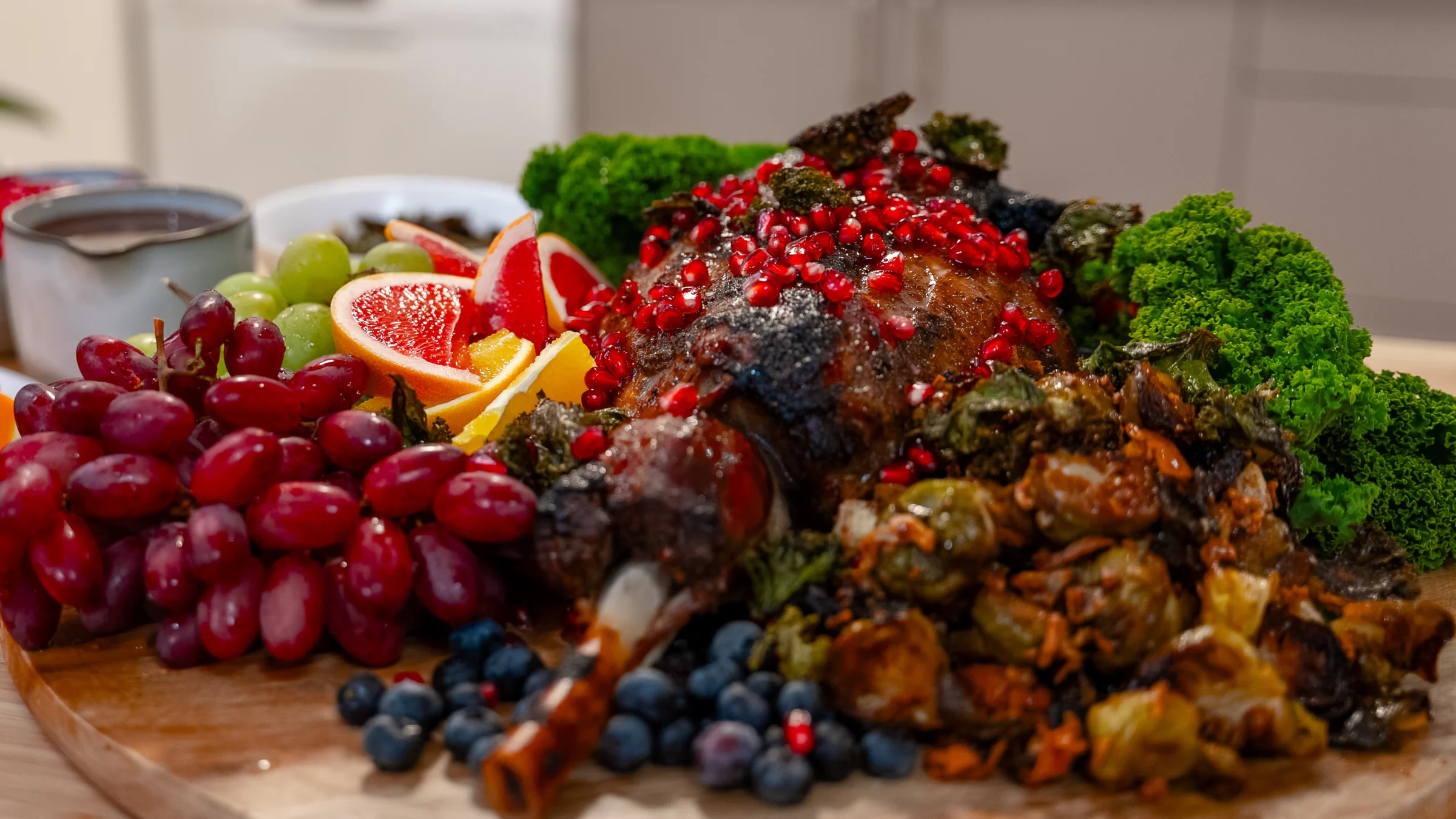
I love serving the lamb on a big board with lots of fruits and some sides.
A Simple Trick For A Beautiful Presentation
Presentation matters with christmas lamb, especially when the roast is served on a large board rather than plated individually. One simple technique that makes a big difference is trimming a small amount of meat away from the end of the bone before roasting or carving. This creates a cleaner look and highlights the shape of the leg.
When carved, the slices fall more naturally, and the exposed bone adds a rustic elegance that suits a holiday table. It feels generous, traditional, and visually striking without requiring complicated garnishing.
Serving Christmas Lamb As A Shared Feast
Instead of serving roast lamb with only one or two sides, this pomegranate lamb shines when surrounded by abundance. A large wooden board works perfectly, allowing the lamb to sit at the center with colors and textures layered around it.
Fresh grapes add sweetness and juiciness. Orange slices bring citrus brightness that echoes the tang of the pomegranate. Berries contribute acidity and color. Brussels sprouts offer bitterness and earthiness, balancing the richness of the meat. And of course, generous handfuls of pomegranate seeds tie everything together visually and flavor-wise.
This style of serving turns roast lamb into an experience rather than just a main dish. It invites people to build their own plates, combine flavors differently, and linger at the table longer. That is exactly what christmas lamb should do.
It’s actually not difficult to remove the seeds quickly and perfectly. All you need is a bowl of water and a wooden spoon.
How To Easily Remove Pomegranate Seeds
Pomegranate can feel intimidating, but it does not have to be. There is a simple, low-mess method that works every time and makes adding fresh seeds to your pomegranate lamb effortless.
Start by cutting off the top of the pomegranate to expose the interior. You will see white lines running through the fruit. Use these natural lines as guides and cut along them to gently separate the pomegranate into sections. Hold each section over a bowl of water and use a wooden spoon to firmly tap the back of the fruit. The seeds will fall into the water while the white membranes float to the surface.
Skim off the floating pieces, drain the seeds, and they are ready to use. This method keeps your hands clean, prevents staining, and produces beautiful seeds that are perfect for scattering over roast lamb and sides.
Why The Sauce Brings Everything Together
A good sauce is not just an accessory for roast lamb; it is the bridge that connects all the flavors on the board. The sauce made from the roasting juices and red wine is rich, savory, and deeply aromatic. It carries the essence of the lamb while adding acidity that complements the pomegranate and fruit.
When drizzled over sliced Christmas lamb, the sauce enhances the meat without masking it. It also pairs beautifully with roasted vegetables and grains, soaking into everything on the plate. This is the kind of sauce that quietly ties the meal together, making every bite feel cohesive.
The red wine sauce pairs beautifully with the lamb.
The Importance Of A Good Food Processor
For a dish like pomegranate lamb, texture matters. The marinade needs to be smooth and well blended so it coats the lamb evenly and penetrates the surface of the meat. A compact, powerful food processor is ideal for this task, especially when working with herbs, garlic, and oil.
I recommend this small and efficient food processor for making the marinade. It is easy to use, simple to clean, and perfect for tasks like this where you want a fine paste without hauling out large equipment.
Using the right tool makes the process calmer and more enjoyable, which is especially valuable when preparing a christmas lamb as part of a larger holiday meal.
A Modern Take On A Classic Roast Lamb
This pomegranate lamb is rooted in tradition but feels current and flexible. It honors the idea of roast lamb as a centerpiece while allowing space for personal expression through sides, fruits, and presentation. It works for formal Christmas dinners and more relaxed holiday gatherings alike.
By focusing on temperature, balance, and thoughtful serving, this roast lamb becomes more than just food. It becomes part of the atmosphere. A dish that invites sharing, conversation, and slow enjoyment. That is what a great christmas lamb should offer.
If you are looking for a roast lamb that feels festive without being heavy, bold without being complicated, and elegant without being stiff, this pomegranate lamb delivers. It is a dish designed for winter tables, warm kitchens, and moments worth lingering over.
A pomegranate lamb roast perfect for Christmas or any other festive dinner. Juicy, sweet, spicy, tangy flavors and a rich sauce for an unforgettable meal.
Total Time:2 hours
Yield:6–8 portions 1x
Ingredients
Scale
1 leg of lamb, approximately 3–4 kg (6 ½–9 lb)
1 parsnip, sliced
1 carrot, sliced
1 onion, cut into quarters
2 dl water (¾ cup)
Marinade
6 sprigs rosemary, roughly chopped
4 sprigs sage, roughly chopped
6 sprigs thyme, roughly chopped
1 garlic bulb, cloves peeled
1 tsp chili flakes
2 tsp salt
3 tbsp olive oil
5 tbsp pomegranate syrup
Sauce
Roasting juices from the lamb
4 dl red wine (1 ¾ cups)
1 tbsp all-purpose flour
1 tbsp butter
Instructions
Add all the marinade ingredients except the pomegranate syrup to a food processor. Blend until you have a fine, smooth paste. Transfer the mixture to a bowl and stir in the pomegranate syrup by hand. Rub the marinade all over the leg of lamb, making sure it is evenly coated.
Place the sliced parsnip, carrot, and quartered onion in a roasting tray. Pour in the water, then place the marinated lamb leg on top of the vegetables.
Roast the lamb in a preheated oven at 200°C (400°F) for 10 minutes. Lower the temperature to 180°C (355°F) and continue roasting for about 1 ½ hours. Use a meat thermometer and cook to your preferred doneness. For slightly pink, tender meat, remove the lamb when the internal temperature reaches 58–60°C (136–140°F).
Remove the lamb from the oven and let it rest while you prepare the sauce.
Pour the roasting juices from the tray into a saucepan and add the red wine. Bring to a boil and let it simmer for a few minutes to reduce slightly.
In a small bowl, mix the all-purpose flour with a little water until smooth and free of lumps. Stir it into the sauce and let it simmer gently until slightly thickened.
Strain the sauce, then stir in the butter off heat until fully incorporated.
Serve the leg of lamb with the sauce and your favorite sides, fruits, or vegetables. Enjoy!
Leave a Reply