DISCLOSURE: This post contains affiliate links. If you buy something through them, I may earn a small commission at no extra cost to you. Thank you for your support!
Salt-baked fish is one of the simplest and most impressive ways to cook a whole fish. It may look dramatic when you see a fish completely buried in a thick crust of salt, but the technique itself is surprisingly straightforward. In fact, salt-baked fish has been used for centuries in coastal cuisines because it produces moist, delicate fish with very little effort.
In the video that accompanies this post, I decided to try making salt-baked fish with a large tilapia that I found at a local Asian store. Tilapia is a fish I grew up eating, and seeing such a large one in Sweden is quite unusual. Most of the time the tilapia you find here are much smaller. That made me curious to experiment with it.
However, while the method worked, the experience also made it clear that not every fish is equally suited for salt-baked fish. Understanding why this technique works, and which fish benefit from it the most, can make a big difference in the final result.
See how to make the recipe in this video.
What Salt-Baked Fish Is And Why It Works
At first glance, salt-baked fish looks like it would produce an extremely salty dish. After all, the fish is completely encased in a thick layer of coarse salt before it goes into the oven. Surprisingly, the fish itself does not become salty. The reason lies in how the salt crust works during cooking. When the salt is mixed with egg whites and a small amount of water, it forms a thick, damp mixture that hardens as it bakes. In the oven, this mixture turns into a firm shell that completely seals the fish.
Inside this shell, the fish gently steams in its own moisture. The crust traps heat and steam, creating a controlled cooking environment that protects the fish from drying out. The result is tender, juicy fish that cooks evenly without needing much attention. This sealed environment is one of the main reasons salt-baked fish is such a reliable cooking method. It is difficult to overcook the fish because the crust regulates the heat and locks in moisture.
The fish also absorbs subtle aromas from any herbs or citrus placed inside the cavity. Another advantage of salt-baked fish is that it requires very little additional seasoning. Since the fish cooks in its own juices, the natural flavor of the fish becomes the star of the dish.
Why Fish Choice Matters For Salt-Baked Fish
In the video, I used tilapia to make salt-baked fish. Tilapia is widely available and relatively affordable, which makes it a practical fish for many recipes. It is also a fish I am very familiar with from childhood. However, after trying it with this technique, I would not consider tilapia the ideal fish for salt-baked fish.
The main reason is texture and fat content. Tilapia is a lean fish with relatively delicate flesh. While that works well for stews or frying, it can make salt-baked fish less satisfying. The flesh cooks quickly and can become slightly dry compared to thicker fish.Another factor is the skin. Tilapia has thin skin, which makes it harder to remove cleanly when breaking open the salt crust. With salt-baked fish, one of the pleasures of the technique is cracking open the crust and lifting away the skin to reveal perfectly cooked fish underneath.
Fattier, firmer fish perform much better with this method. Fish such as sea bass, snapper, or salmon are excellent choices for salt-baked fish because they have thicker flesh and higher fat content. The fat helps keep the fish moist and flavorful during cooking. Sea bream and red snapper are particularly popular choices. These fish hold their structure well and produce beautiful results when cooked as salt-baked fish. If you want the best experience with salt-baked fish, choosing the right fish makes a significant difference.
Herbs and citrus fruits make the fish very aromatic.
Preparing Whole Fish The Right Way
When making salt-baked fish, preparing the whole fish properly is an important step. One small tool that makes the process much easier is a good pair of kitchen scissors. Whole fish often have sharp fins that can be awkward to remove with a knife. Kitchen scissors allow you to quickly trim the fins and tidy up the fish before cooking. This not only improves presentation, but it also makes the fish easier to handle once the salt crust is cracked open.
A sturdy pair of kitchen scissors is a great tool to have in any kitchen. If you are looking for a reliable option, I recommend these kitchen scissors. They make simple preparation tasks like trimming fish fins much easier and safer. Once the fish is cleaned and trimmed, it can be lightly seasoned and filled with aromatics before being sealed in the salt crust.
Using Citrus And Herbs For Flavor
Even though salt-baked fish cooks inside a sealed crust, you can still add flavor by placing ingredients inside the fish cavity.
Citrus fruits work particularly well. Lemon is the most common choice, but you can easily use other citrus fruits depending on what you have available. Orange, lime, or even grapefruit can add subtle aromatic notes while the fish cooks.
The steam trapped inside the salt crust carries these aromas into the fish without overpowering its natural flavor. Fresh herbs also pair beautifully with salt-baked fish. Dill, parsley, thyme, or fennel fronds can all add gentle fragrance to the dish. In the video, I used dill together with sliced citrus, which complements the delicate flavor of the fish. The combination of citrus and herbs creates a light, fresh flavor profile that works especially well with whole roasted fish.
The layer of salt needs to be thick and completely cover the fish.
Serving Salt-Baked Fish
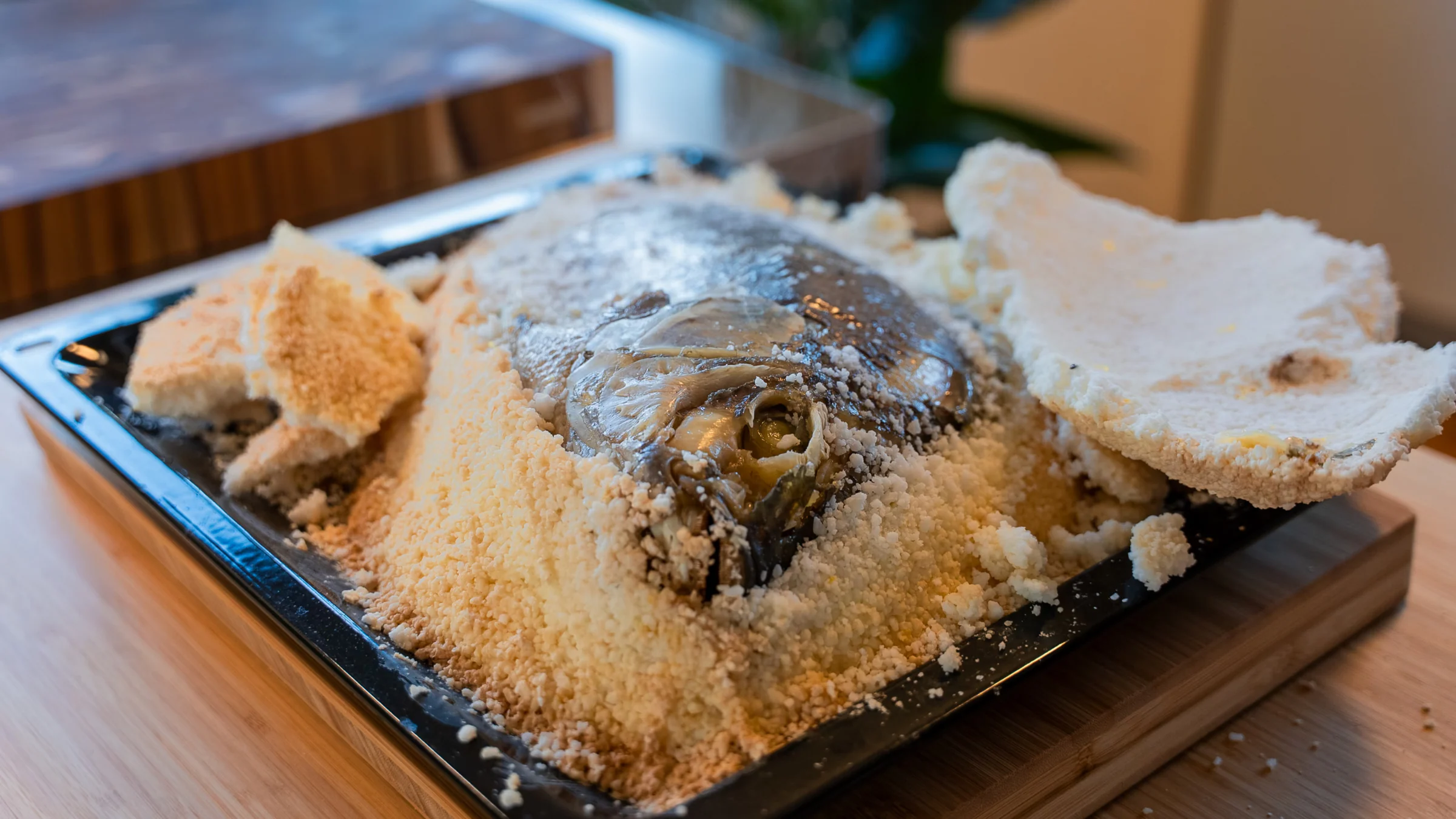
One of the most satisfying moments when making salt-baked fish is cracking open the crust. The hardened shell breaks apart easily with the back of a spoon or a knife, revealing the fish inside. Once the crust is removed, the skin can be lifted away to expose the moist fillets underneath.
Salt-baked fish is best served immediately while it is still warm. The flesh should be tender and flaky, with a clean natural flavor. Simple accompaniments work best because they allow the fish to remain the focus of the meal. Boiled or roasted potatoes are a classic pairing with salt-baked fish. The mild flavor of potatoes complements the delicate fish very well. A drizzle of olive oil and a squeeze of fresh lemon juice are often all that is needed.
A crisp green salad is another great side dish. The freshness and acidity help balance the richness of the fish. Grilled vegetables, steamed greens, or a simple tomato salad also work beautifully alongside salt-baked fish. If you want something a little more substantial, serving the fish with crusty bread allows you to enjoy the natural juices released during cooking.
A Simple Technique Worth Trying
Salt-baked fish may look elaborate, but it is actually one of the easiest ways to cook a whole fish. The salt crust protects the fish, locks in moisture, and produces consistently tender results. The experiment with tilapia in the video showed that the technique itself works well, but the choice of fish can make a big difference. Lean fish like tilapia can still be cooked this way, but fattier fish such as sea bass, snapper, or salmon will usually give better results.
Once you understand the basics of salt-baked fish, it becomes a method that you can easily adapt. Different herbs, citrus fruits, and fish varieties can all bring their own character to the dish. With the right fish and a few simple ingredients, salt-baked fish becomes a reliable and satisfying way to prepare whole fish at home.
Salt-baked fish is a classic whole fish cooking method that keeps fish moist and tender.
Total Time:1 hour 10 minutes
Yield:4–6 portions 1x
Ingredients
Scale
2–3 kg (4 ½–6 ½ lb) whole fish, such as sea bass, salmon, or snapper
≈ 3 kg (6 ½ lb) coarse sea salt
1 tbsp lemon zest
5–6 egg whites
150–200 ml (⅔-¾ cup) water
1–2 tbsp cooking oil
½ tsp fine salt
2 citrus fruits, sliced
1 bunch fresh dill
Instructions
Preheat the oven to 200°C (400°F).
Rinse the fish under cold water and pat it dry thoroughly with paper towels.
Use kitchen scissors to trim off the fins.
In a large bowl, combine the coarse salt with the lemon zest, egg whites, and water. Mix until the salt resembles wet sand. The mixture should hold together when pressed in your hand but should not feel wet or runny. If it feels too dry, add a little more water. If it becomes too wet, add a bit more salt.
Rub the fish lightly with the cooking oil and season the inside and outside with the fine salt.
Stuff the cavity of the fish with the citrus slices and the dill.
Spread a layer of the salt mixture on a baking tray, roughly the size of the fish.
Place the fish on top of the salt layer.
Cover the fish completely with the remaining salt, pressing it firmly to form a thick crust.
Bake in the oven for about 40 minutes, depending on the size of the fish.
Remove the tray from the oven and let the fish rest for a few minutes. Crack open the salt crust and brush away the excess salt.
Carefully remove the skin and serve the fish warm.
Leave a Reply